How to Match Blinds to Your Interior Design Style
How to Match Blinds to Your Interior Design Style
Windows are often called the eyes of a home, but blinds are the expression. The wrong choice can make a beautifully designed room feel unfinished, while the right one can quietly tie everything together. It’s not just about blocking sunlight—it’s about shaping atmosphere, balance, and flow.
Interior design trends change quickly, yet cohesive styling remains timeless. According to a 2024 Houzz survey, 63% of homeowners prioritize “coordinated design” when renovating living spaces. Window treatments consistently rank among the top five finishing touches that impact overall room perception.
Choosing blinds that match your interior design style requires more than picking a popular color. It involves understanding materials, textures, proportions, and how light interacts with your space. Here’s how to align your blinds with your home’s personality for a result that feels intentional and refined.
Understanding Your Interior Design Foundation
Before selecting blinds, clarity about your interior style is essential. Every design approach—whether minimalist, farmhouse, or contemporary—has defining elements. These include color palette, texture preference, architectural lines, and furniture silhouette.
Design experts note that rooms with consistent visual themes appear up to 20% more spacious, according to environmental psychology studies. That sense of spaciousness often hinges on subtle details, including window treatments.
Take a moment to evaluate:
- Are your furnishings sleek or ornate?
- Do you lean toward warm or cool tones?
- Is your décor layered and textured or streamlined and simple?
- Are metals and hardware matte, polished, or rustic?
Answering these questions helps narrow your blind options dramatically. Once your style direction is clear, matching blinds becomes far more intuitive.
Modern and Minimalist Spaces
Clean lines demand clean window treatments. In modern and minimalist interiors, simplicity is the dominant language. Clutter-free spaces emphasize geometry, neutral palettes, and natural light.
Blinds that work particularly well include:
- Roller blinds in white, gray, or black
- Aluminum or slim-profile Venetian blinds
- Motorized options with concealed hardware
Minimalist interiors benefit from blinds that visually disappear. According to the National Association of Home Builders, contemporary homes have increased window sizes by nearly 15% over the past decade. That makes streamlined coverings even more important to preserve open sightlines.
Avoid heavy textures or ornate patterns. Instead, focus on subtle finishes and smooth surfaces that echo the room’s architecture.
Traditional and Classic Interiors
Where modern spaces embrace restraint, traditional interiors celebrate richness and detail. Crown molding, layered textiles, and warm wood tones define these rooms.
In these settings, blinds should complement—not compete with—decorative elements. Wood blinds in walnut, cherry, or oak finishes often pair beautifully with traditional furniture. Faux wood options offer similar warmth while improving moisture resistance in kitchens or bathrooms.
Layering can also enhance the look. Pairing blinds with soft drapery panels creates dimension and visual softness. Interior design studies show that layered window treatments increase perceived comfort ratings in living rooms by up to 30%.
Balance is key here. If your furniture features carved details and intricate fabrics, keep blind colors harmonious rather than contrasting.
Farmhouse and Rustic Design
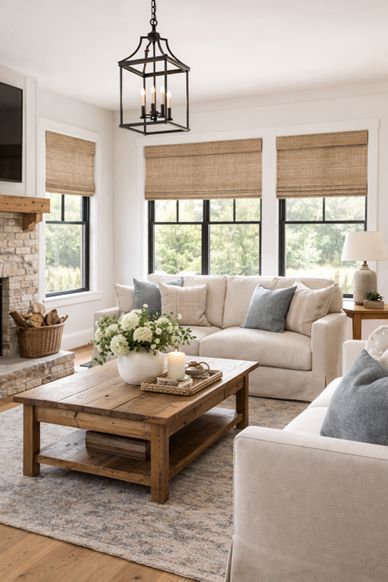
Rustic interiors thrive on texture and authenticity. Exposed beams, distressed finishes, and natural materials set the tone. Window treatments should reinforce that grounded, welcoming feel.
Wood blinds in lighter stains, woven wood shades, or textured neutrals work especially well. These materials introduce organic warmth while maintaining functionality.
Texture Matters More Than Color
Farmhouse design often relies on subtle variations in tone rather than bold hues. Linen whites, soft taupes, and weathered grays dominate the palette. Choosing blinds with visible grain or woven fibers enhances that tactile appeal.
According to Zillow’s housing trend reports, searches for “modern farmhouse” styles increased over 70% in recent years. That popularity has made natural-textured blinds one of the fastest-growing window treatment categories.
Keep finishes matte rather than glossy to maintain authenticity.
Contemporary and Transitional Homes
Some homes don’t fit neatly into one category. Transitional interiors blend modern simplicity with traditional warmth. Contemporary design, meanwhile, embraces current trends while maintaining sophistication.
In these homes, versatility becomes the guiding principle.
Consider:
- Neutral-toned Roman shades for softness
- Wide-slat wood blinds for a balanced aesthetic
- Subtle patterned fabrics that add interest without overwhelming
Color coordination plays a significant role here. Designers often recommend selecting blinds one shade lighter or darker than the wall color. This approach creates contrast while preserving cohesion.
Lighting also influences the choice. Contemporary spaces frequently incorporate larger windows, and research from the U.S. Department of Energy indicates that efficient window coverings can reduce heat gain by up to 45%. Function and style can work together seamlessly.
Industrial and Urban-Inspired Spaces
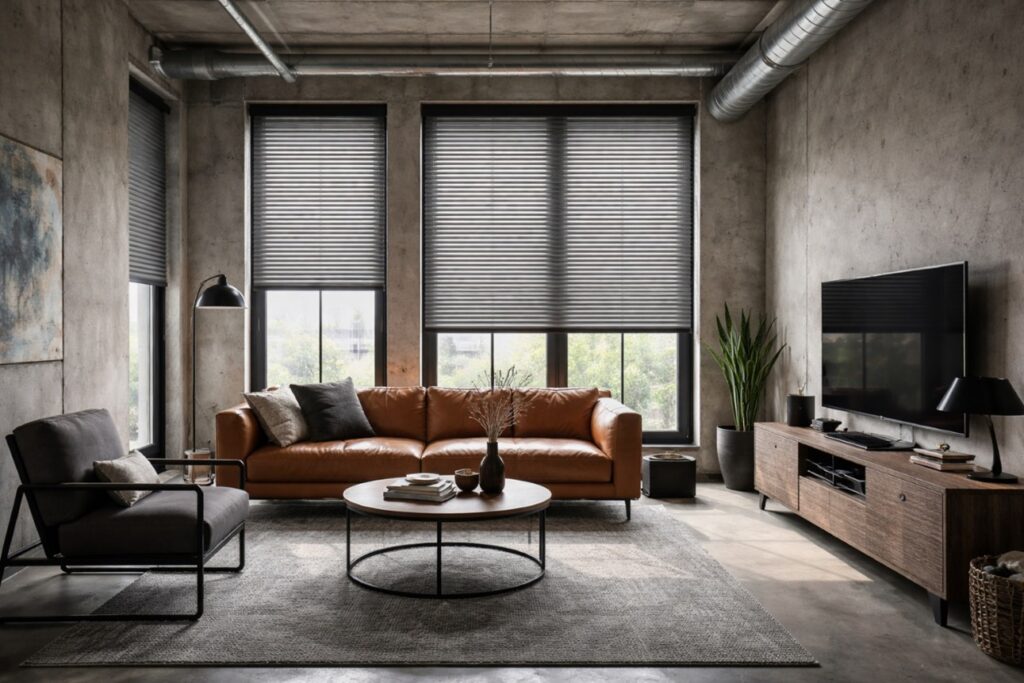
Industrial interiors celebrate raw materials. Think exposed brick, steel fixtures, and concrete surfaces. Window treatments in these spaces should echo that bold structural feel.
Metal blinds in brushed aluminum or matte black reinforce the aesthetic. Dark roller shades can also complement the urban palette.
Contrast Creates Impact
Industrial rooms often feature neutral or monochromatic schemes. Blinds can either blend in or provide a sharp counterpoint. For example:
- Black blinds against white walls create dramatic framing
- Gray blinds soften concrete-heavy spaces
- Textured fabrics add warmth to offset metal accents
Balance is especially important here. Too many hard surfaces can make a room feel cold, so blinds with slight texture or fabric backing can soften acoustics and improve comfort.
Occasionally, the best design choice is the one that seems understated. Neutral blinds function as visual anchors when décor elements vary widely. In homes with mixed influences or evolving styles, a neutral approach prevents clashes.
Soft whites, warm beiges, and muted grays maintain flexibility. Designers often refer to these tones as “bridge colors” because they connect furniture, flooring, and wall hues without dominating.
Homes staged with neutral window treatments sell faster on average, according to real estate data from Redfin. That broad appeal stems from their adaptability across tastes.
When unsure, neutrality rarely disappoints.
Light control influences mood more than many realize. Studies in environmental design show that natural daylight improves productivity by 15% and overall well-being ratings significantly.
Blinds affect how light enters and diffuses throughout a room. Sheer materials create softness, while blackout options offer privacy and insulation. Matching light control to room function ensures comfort and practicality.
Bedrooms benefit from room-darkening options. Living areas often thrive with adjustable slats that manage glare without sacrificing brightness.
Consider how your daily routine interacts with sunlight. The right blind enhances both comfort and aesthetic harmony.
Hardware details can elevate even the simplest blinds. Finishes should coordinate with doorknobs, cabinet pulls, and light fixtures for a cohesive look.
Brushed nickel pairs well with cool palettes. Oil-rubbed bronze complements warmer schemes. Matte black works across modern and industrial settings.
Small decisions compound visually. Interior stylists estimate that consistent hardware finishes improve perceived design cohesion by nearly 25%.
It’s often these finishing touches that distinguish a thoughtfully designed room from one that feels incomplete.
Bringing It All Together with Confidence
Blinds influence more than privacy and light control. They shape proportion, define lines, and reinforce a room’s personality. When materials, finishes, and tones align with your interior style, the result feels seamless and complete.
Thoughtful selection transforms windows into architectural highlights. Each design choice builds toward harmony rather than distraction. The most beautiful rooms are rarely accidental; they reflect consistent, intentional decisions.
Your windows frame every sunrise and sunset you experience at home. Why not make sure the view inside feels just as remarkable?
Some blogs are written by authorized members of our marketing team for marketing purposes only. Some content may not correctly depict product specifications and may vary depending on the product. For more information, please call our sales office.