Wood vs. Faux Wood Blinds: Choosing the Best Style for Your Home
Wood vs. Faux Wood Blinds: Choosing the Best Style for Your Home
When it comes to transforming the look of your windows, blinds play a far greater role than just blocking sunlight. They set the tone of your room, affect comfort, and even impact energy efficiency. The debate between real wood and faux wood blinds is one that has many homeowners weighing aesthetics against practicality.
Picture this: the warm richness of authentic wood bringing a touch of nature indoors versus the sleek durability of faux wood blinds that can withstand humidity without warping. Both options are appealing, but which one makes the most sense for your home?
That choice depends on lifestyle, design goals, and even regional climate. By looking closely at how each type performs in everyday living, homeowners can confidently choose blinds that not only look beautiful but also function in the way they need most.
The Appeal of Real Wood Blinds
Authentic wood blinds carry a natural charm that synthetic materials often try to mimic. Because they are crafted from real hardwood, each slat has unique grain patterns and tones, making every set one-of-a-kind.
Wood blinds are typically lighter in weight than faux wood, making them easier to lift and operate on larger windows. They also come in a wide variety of stains and finishes, blending seamlessly with cabinetry, flooring, and furniture.
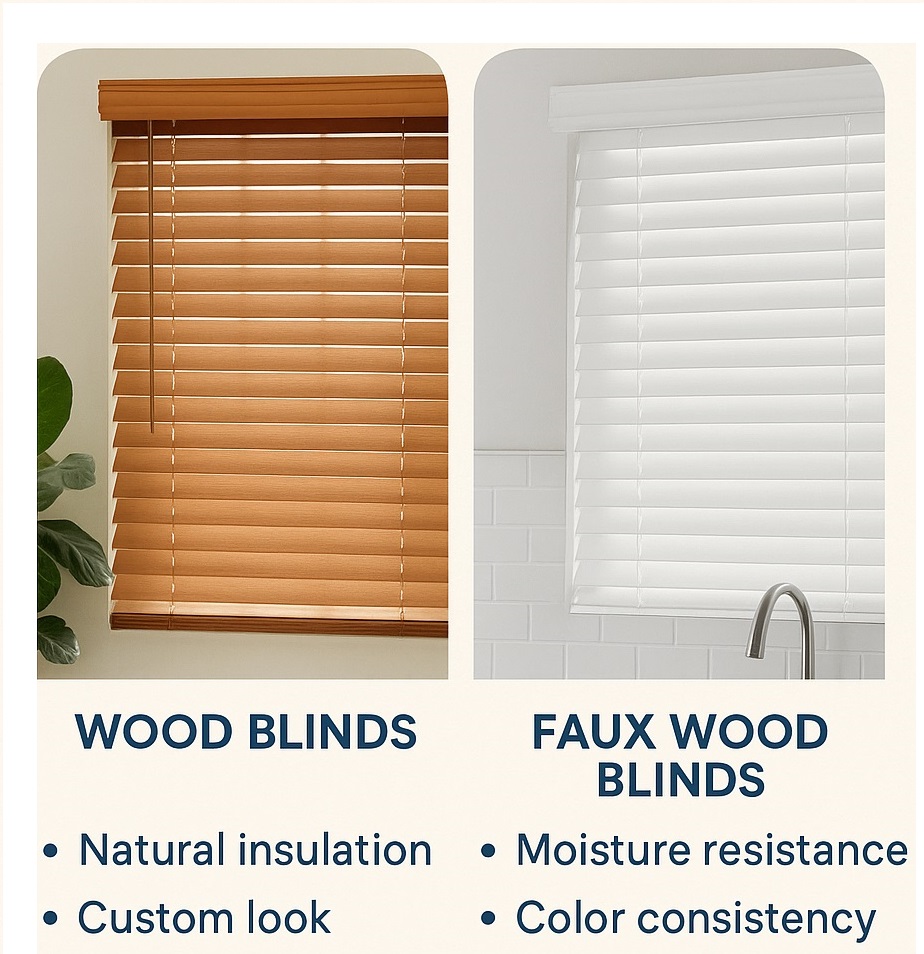
- Natural insulation: Wood is an excellent insulator, helping regulate indoor temperatures. According to the U.S. Department of Energy, properly fitted blinds can reduce heat gain by up to 45%.
- Custom look: They offer a high-end, polished appearance that elevates traditional and contemporary interiors alike.
Where Faux Wood Excels
While wood blinds are admired for their beauty, faux wood blinds are valued for their resilience. Made from PVC, vinyl, or composite materials, they are designed to replicate the appearance of real wood while offering superior resistance to moisture and warping.
This makes them especially popular in kitchens, bathrooms, and humid climates where natural wood may struggle. They’re also generally more affordable, making them a budget-friendly way to achieve the wood look without the higher price tag.
Another advantage is color consistency. Unlike wood blinds, which can vary in tone, faux wood options are manufactured for uniformity. For homeowners who prefer a crisp, consistent style across multiple rooms, this can be a major benefit.
Cost Comparison: Breaking Down the Numbers
Price is often the deciding factor when choosing between wood and faux wood blinds.
- Wood blinds: On average, they cost $90–$200 per window, depending on size, finish, and customization.
- Faux wood blinds: Typically priced at $50–$120 per window, they offer significant savings while maintaining a similar appearance.
Industry data shows that nearly 60% of homeowners opt for faux wood blinds when redecorating, primarily due to their cost-effectiveness paired with durability. However, those looking to invest in a more luxurious, long-term window solution often lean toward real wood.
Maintenance and Longevity
Cleaning and upkeep differ between the two materials. Wood blinds should be dusted regularly with a microfiber cloth and lightly cleaned with wood-safe products to prevent damage. They require more careful care since exposure to excess water can cause warping or fading over time.
Faux wood blinds, however, can handle heavier cleaning. They can be wiped down with a damp cloth, soap, or mild cleaners without risk. This ease of maintenance makes them a practical option for households with children or pets where messes are common.
In terms of lifespan, both styles can last 10–15 years with proper care, but faux wood blinds tend to retain their shape and finish longer in challenging environments.
Style and Design Versatility
The design choice often comes down to whether you want timeless warmth or modern versatility.
Wood blinds shine in spaces where authenticity and natural tones matter most. They complement hardwood floors, wood furniture, and traditional architectural details.
Faux wood blinds, on the other hand, provide more color flexibility—often available in bright whites and neutrals that pair well with contemporary interiors. Many even feature embossed grain patterns that make them nearly indistinguishable from real wood at first glance.
Environmental Considerations
Sustainability also plays a role for many buyers. Wood blinds sourced from responsibly managed forests can be eco-friendly, offering a renewable option with less plastic. However, they require more care and may not last as long in damp areas.
Faux wood blinds, while durable, are typically made from non-biodegradable materials. Some manufacturers are beginning to incorporate recycled composites, but environmental impact remains a consideration.
For eco-conscious households, the decision often hinges on whether longevity (faux wood) or natural sourcing (wood) is prioritized.
Making the Choice
At the end of the day, neither wood nor faux wood blinds are universally better—they simply meet different needs. Those who value authenticity, natural warmth, and a high-end look will often prefer wood blinds. Homeowners who want durability, affordability, and low maintenance may lean toward faux wood.
A Final Look at Your Options
Choosing between wood and faux wood blinds is less about which is superior and more about what works best in your daily life. Real wood offers warmth, character, and elegance, while faux wood delivers practicality, resilience, and budget-friendliness.
Both options can elevate the style and comfort of your home. So, the real question becomes: do you want the natural luxury of wood or the worry-free convenience of faux wood?
Some blogs are written by authorized members of our marketing team for marketing purposes only. Some content may not correctly depict product specifications and may vary depending on the product. For more information, please call our sales office.